Ad-libitum calf feeding for early growth and gains

This article compares ad-libitum and restrictive milk feeding, explains the key management requirements, and presents trial results on how intensive early nutrition can support calf growth, health, organ development, and later milk production.

Header AD-Libitum kalb-josera-3 (2)

With ad-libitum milk feeding, milk or milk replacer (MR) is available to the calf around the clock. The calf decides itself when and how much it drinks. This feeding method is typically limited to the first four weeks of life in practice

The recommendation for this feeding method is based on the fact that the calf's digestive system in the first weeks of life is primarily designed for milk as a nutrient source. A good energy and nutrient supply during this time is crucial, as it sustainably influences the animal's later performance through metabolic programming.


Restrictive Feeding – Controlled Milk Volumes

With restrictive feeding, the calf receives a predetermined amount of milk according to a fixed feeding schedule. The resulting feeling of hunger encourages the calf to consume solid feed early. This is intended to promote rumen development and accelerate the transition to solid food intake. However, depending on the milk volume and the concentration of the milk replacer, the calf may not fully meet its energy requirements. As a result, lower daily weight gains and reduced later lifetime performance may occur.

1

How much does the calf need?

To meet the energy requirements of a calf with a live weight of 45–50 kg, approximately 1 kg of milk replacer (MR) must be consumed daily. However, with a milk feeding volume of 6 liters and a concentration of 130 g MR per liter of milk, the actual intake is only around 780 g MR – meaning the maintenance requirement is not fully met.

Therefore, at least 8 liters of milk should be administered per day to secure the basic requirement. However, studies show that with 8 liters per day, the growth potential is not fully exploited.

Ad-libitum fed calves can consume up to 20 liters of milk daily in the first four weeks of life. It is crucial that milk is always freely available – the calf must not develop a feeling of hunger. If milk is missing or offered irregularly, the animals drink too hastily next time, which can easily lead to digestive disorders.


What should be considered for both feeding methods?

Restrictive Feeding for Calves

  • Milk volume and concentration must be sufficiently high

  • Recommendation: 130–140 g MR per liter of milk

  • Daily milk volume: up to 12 liters per day

  • Three meals per day improve digestion and milk intake


Ad-libitum Feeding for Calves

  • Provide milk for free intake constantly in the first weeks

  • Observe feeding hygiene: Clean feeding buckets with warm water before each refill

  • In summer, add acid for stabilization: adjust pH to approx. 5.5

  • Recommendation: JOSERA Vital-Acid (LINK), dosage 2 ml per liter of milk replacer


Does ad libitum feeding pay off in calf rearing?

Practical trials show that ad-libitum feeding has a positive effect on growth and development. This is demonstrated by the results of a feeding trial conducted by JOSERA in cooperation with the Weihenstephan-Triesdorf University of Applied Sciences.

2

Key data of the trial

  • 43 Simmental calves

  • 2 groups

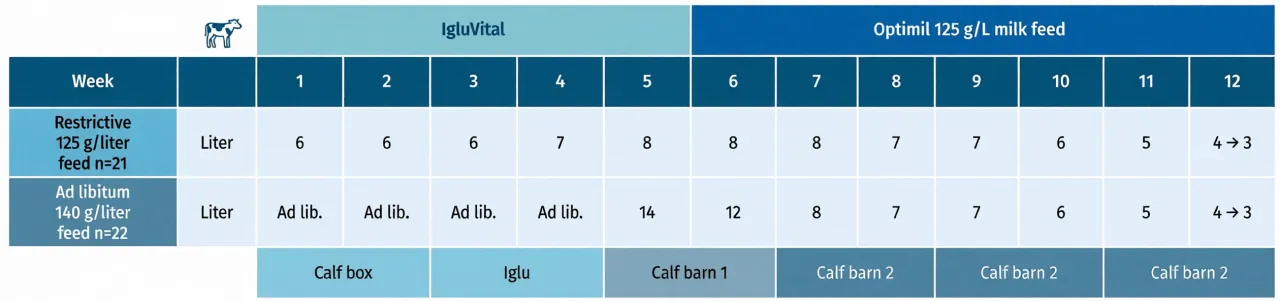
  • Ad-libitum feeding: 4 weeks

  • Restrictive feeding: 6 liters per day

  • 5 weeks JOSERA IgluVital milk replacer

  • 7 weeks JOSERA Optimil milk replacer


Ad libitum group – high intake and good tolerability

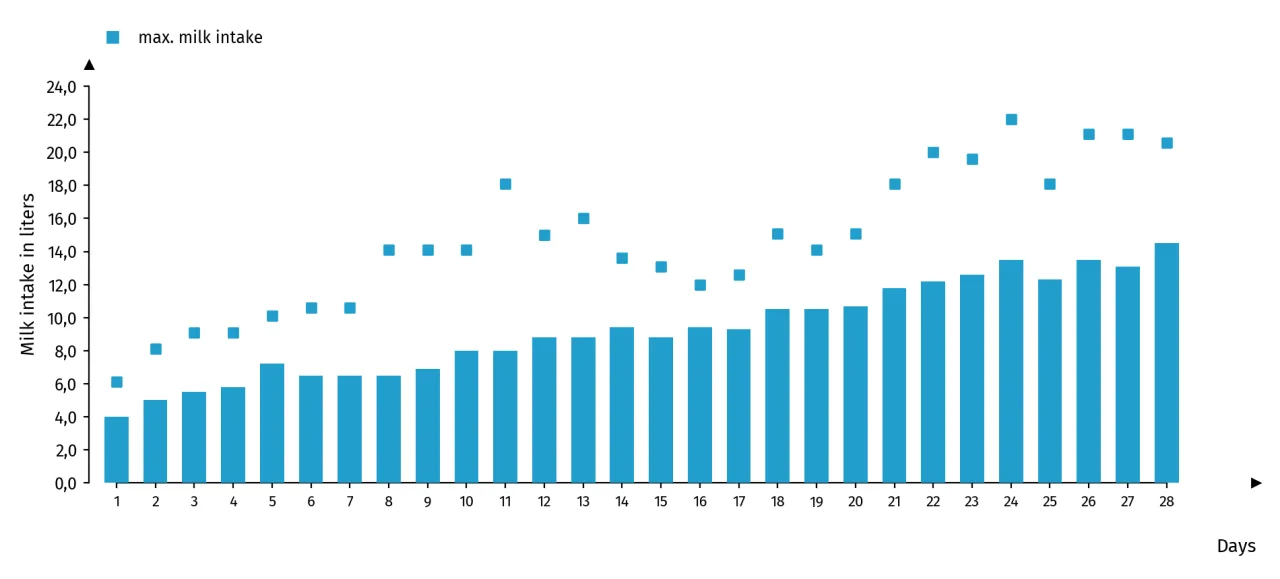
The average milk intake of ad-libitum fed calves increased to 14.6 liters per day in the first four weeks of life. Individual animals even reached up to 22 liters daily in the fourth week. These results confirm that JOSERA IgluVital milk replacer has very high palatability and is excellently tolerated even with large milk volumes.

3
Figure 1 average milk intake in liters/day, Weihenstephan-Triesdorf University of Applied Sciences (Johe 2018)

The Trial – Practical Results

To investigate the effects of the feeding method on milk intake, growth, and later performance, JOSERA conducted a feeding trial together with the Weihenstephan-Triesdorf University of Applied Sciences.

The aim was to directly compare ad-libitum feeding in calves with restrictive feeding and to evaluate the influence on calf development.


Development of animal weights up to day 35 of life

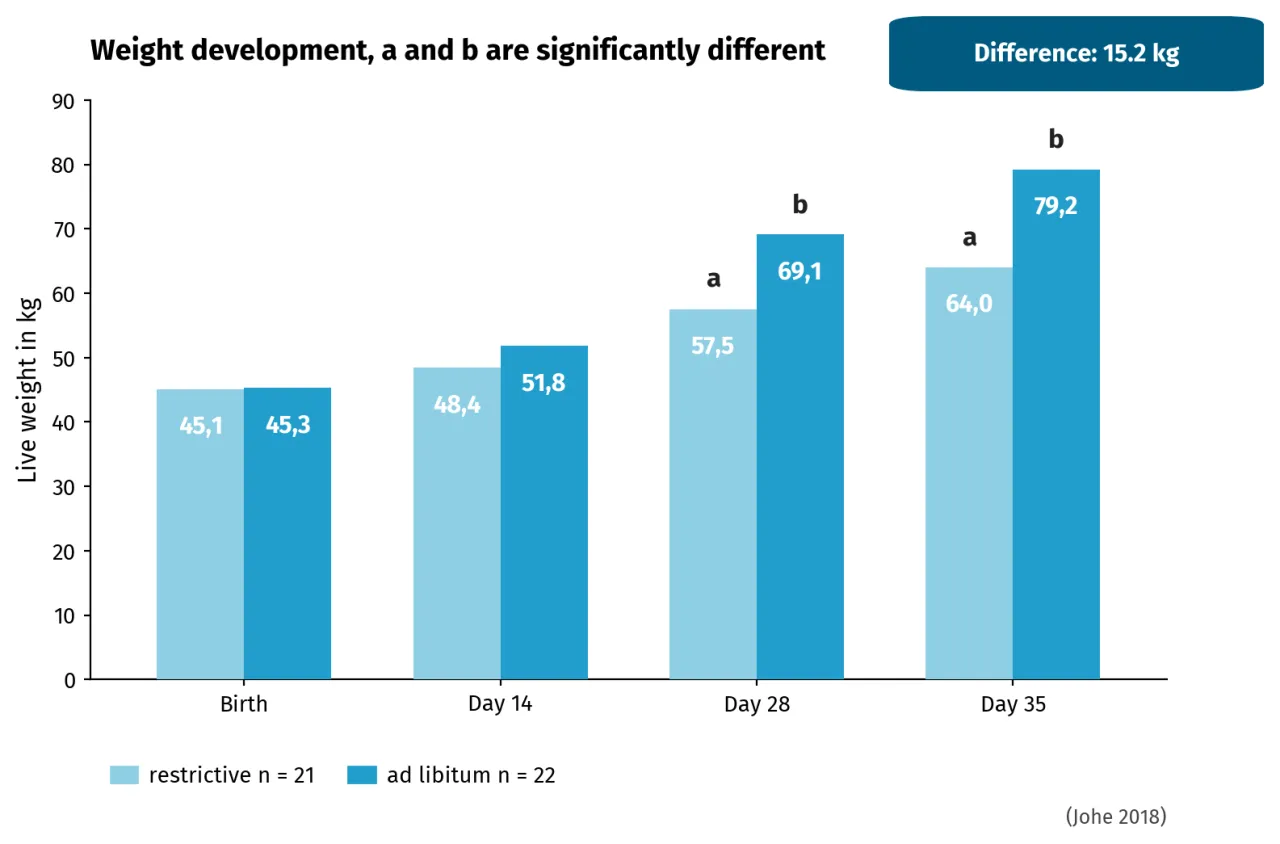
With comparable birth weights, ad libitum fed calves showed significantly higher body mass development. From day 28 of life, the weight differences were significantly different with a weight difference of 11.6 kg.

4
Figure 2 weight development, a and b are significantly different, (Johe 2018)

Higher milk yield through Ad libitum calf feeding?

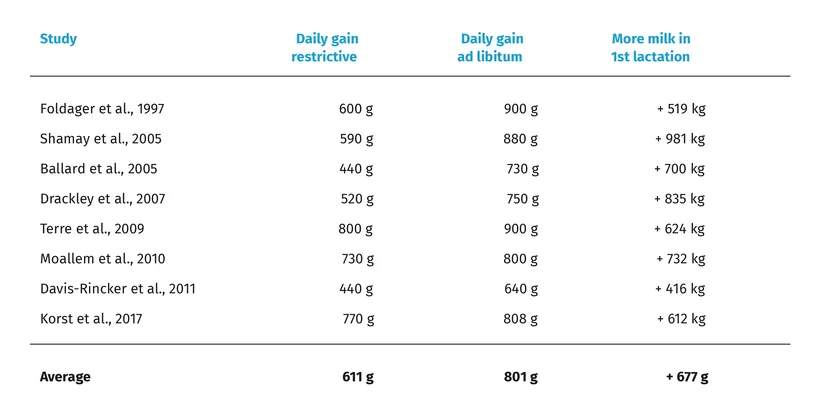
The results confirm that intensive rearing enables higher long-term profitability in dairy farming – an effect supported by numerous scientific studies. At its core, this means a rethinking in practice: investments in the newborn calf, especially in the first weeks of life, pay off. A good nutrient supply during the milk feeding phase demonstrably positively influences later milk yield in the first lactation.

5

Excursion: Cell division and cell growth

The nutrient supply in the early growth phase significantly regulates the cell division rate and thus organ development. Thus, the later lifetime performance of the dairy cow is "programmed" early through feeding intensity – this effect is known as metabolic programming.

6

Why does intensive calf feeding lead to higher milk yield?

In the first 50 days of life, intensive cell division growth occurs in the internal organs, while later growth is mainly characterized by cell enlargement. Therefore, intensive nutrient supply in the early phase directly affects organ development and long-term milk yield.

Positive organ development in calves

An American study from Blacksburg University clearly demonstrates this connection


Trial setup:

Two groups were fed differently over eight weeks:

  • Restrictive

  • Intensive


Calves that receive only limited nutrient supply in the first weeks of life do achieve their weight later through compensatory growth, but show no performance increase later in life. The reason: this catch-up growth occurs in the cell enlargement phase, no longer in the primary cell division phase.

This means: Compensatory growth can correct body weight, but does not influence organ development, which occurs almost exclusively in the first weeks of life.


Result:

  • The intensively fed calves were 24.5 kg heavier after eight weeks than the restrictively fed animals.

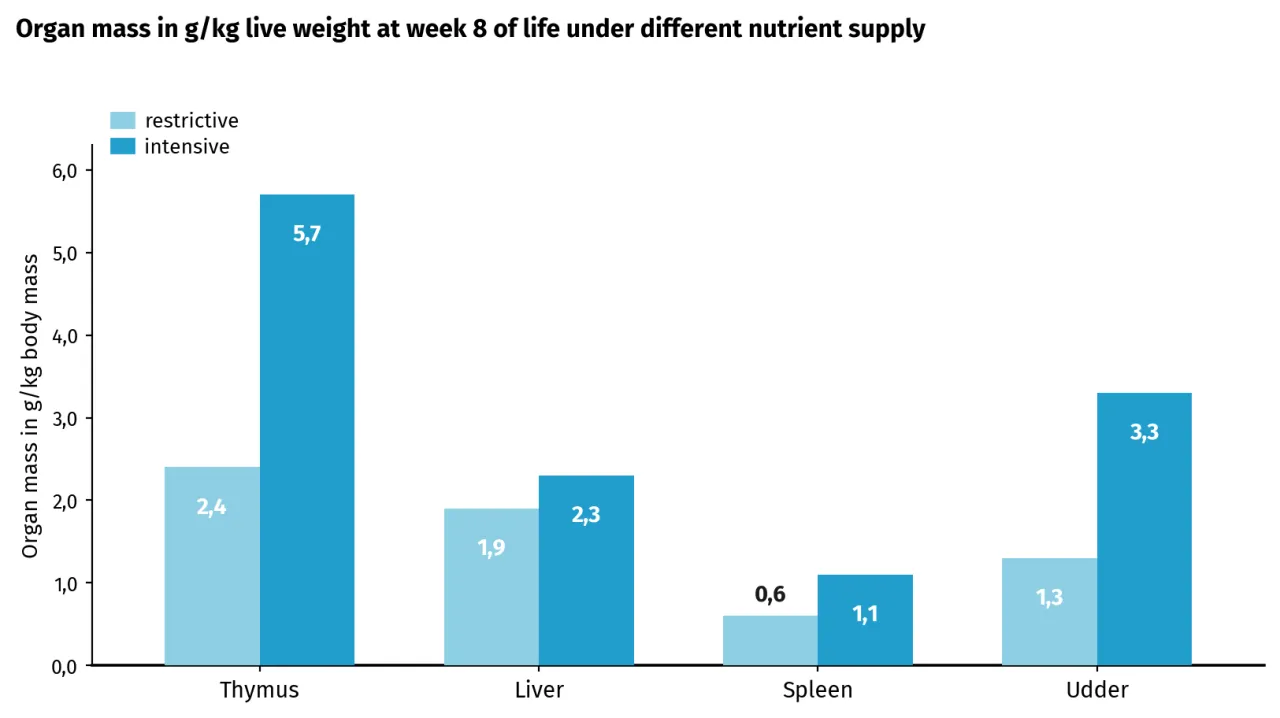
  • In addition, intensively fed calves showed a significantly higher organ mass per kg live weight.


Conclusion:

Intensive nutrient supply promotes stronger cell growth of certain organs in the early cell division phase. This leads to the development of more productive animals, which can subsequently achieve higher milk yields in the first lactation.

7

Positive development of udder tissue in calves

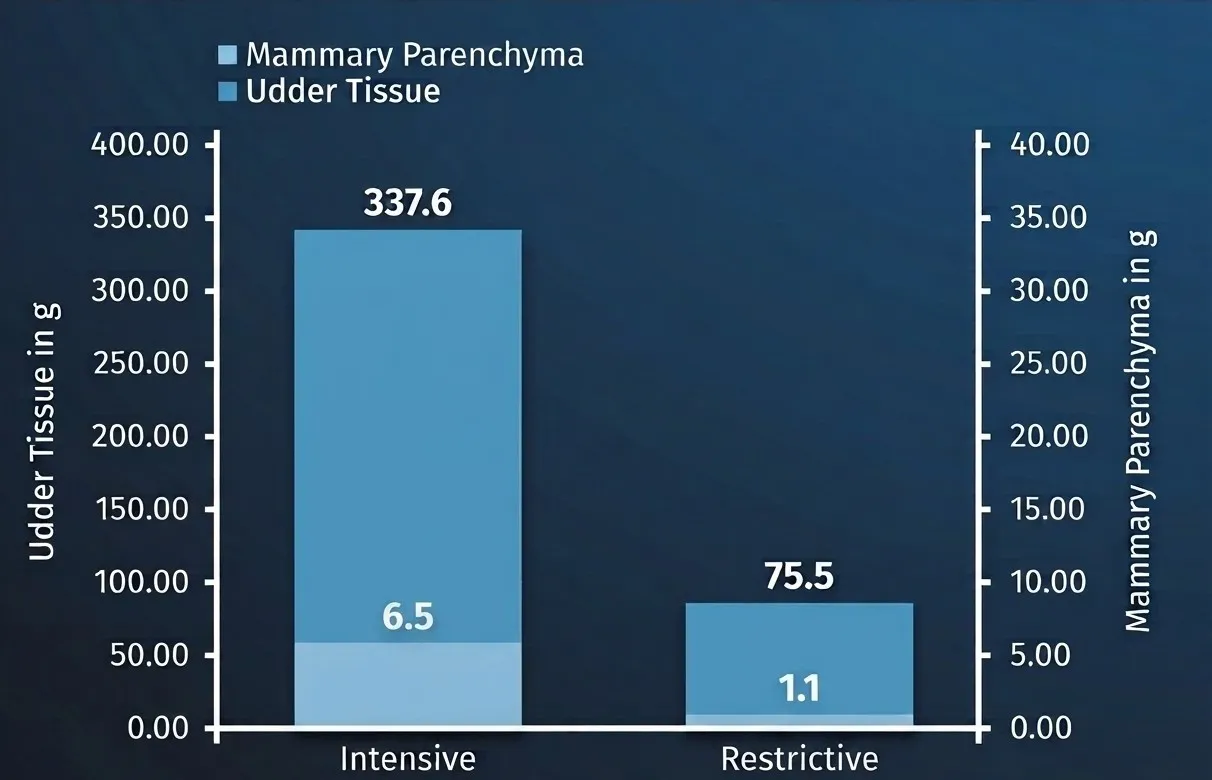
Researchers Soberon and Van Amburgh (2017) also demonstrated the effect of metabolic programming on the development of udder tissue.


Trial setup:

Two feeding groups over several weeks:

  • Restrictive:0.6 kg MR per day

  • Intensive:1.3 kg MR per day


8
Figure 4 udder and mammary gland tissue in g (Soberon and Van Amburgh 2017)

9
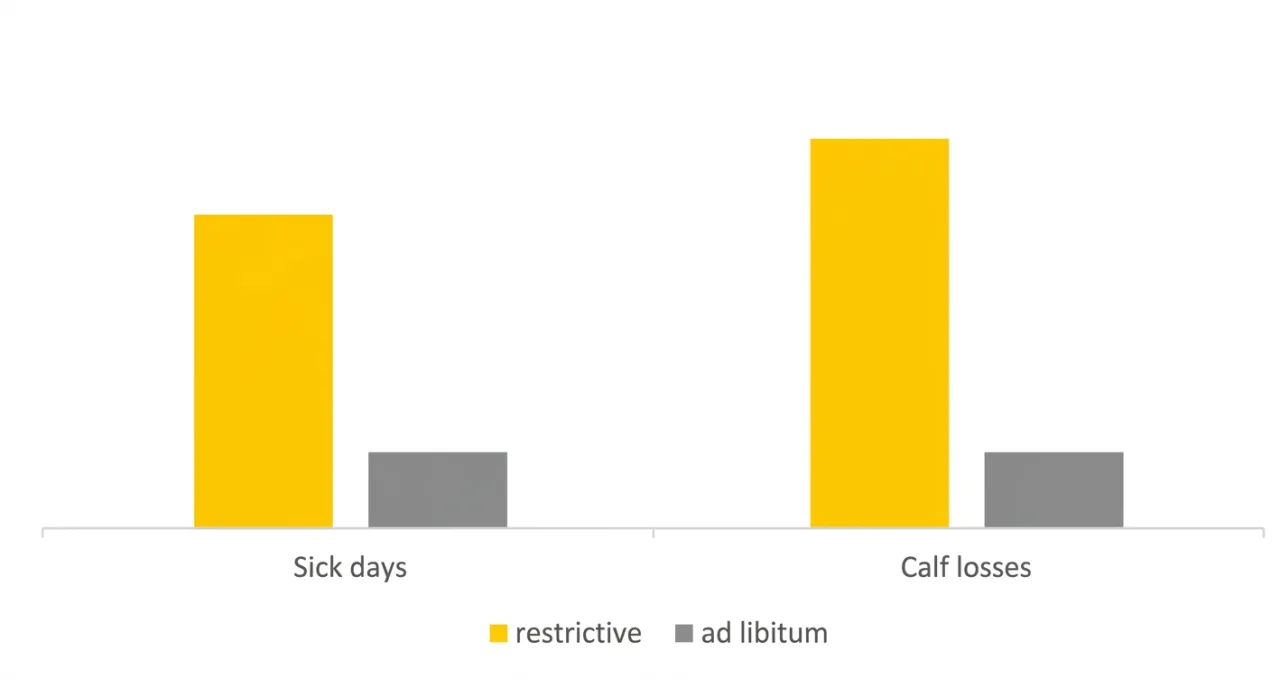
Figure 5 diseases and losses depending on MR intake, (Schuldt and Dinse 2016)

Histological examinations clearly showed on day 54 of life that the intensively fed calves had significantly larger udder and mammary gland tissue than the restrictively fed animals.


Positive effects on health status and lifetime performance

Schuldt and Dinse (2016) also showed in a study with 532 calves that higher MR intake improves calf health. Calves with intensive feeding showed:

  • a lower incidence of disease,

  • fewer losses,

  • and higher later lifetime performance as dairy cows.


Trial results at a glance

Key findings from the Ad-libitum trial:

  • Milk intake of the Ad-libitum group on day 28 of life: Ø 14.6 liters/day (max. 22 liters)

  • Weight difference on day 35 of life: +15.2 kg in favor of the Ad-libitum group

  • At weaning (day 86 of life): Ø +8.4 kg weight advantage

  • Final weights:Ad-libitum group: 11 weeks = 139 kg

  • Final weights:Restrictive group: 10.6 weeks = 122 kg


10
11 Weeks: 139 kg

Conclusion – Economical and animal-friendly rearing success

High milk volumes of up to 22 liters per animal per day are easily possible with JOSERA IgluVital milk replacer.

Through intensive feeding, average daily gains of 968 g per animal per day are achieved. This leads to more robust calves, lower treatment costs, and a better health status.

The additional costs for the higher milk replacer consumption (approx. 21.6 kg MR) are already offset on day 35 of life by the additional gain of 15.2 kg live weight.

Additionally, there is an economic advantage due to an earlier first calving age and higher milk yield in the first lactation.

JOSERA recommendation for ad libitum calf rearing

Colostrum supply: After birth, at least two colostrum meals of 3–4 liters each should be administered.

The colostrum should be milked immediately after birth and offered to the calf. → Read our guide on management rules around the birth of your calf.

Milk feeding phase (first 4 weeks): For good nutrient supply in the first four weeks of life, we recommend JOSERA IgluVital milk replacer.

Further rearing: From the 5th week of life, a switch can optionally be made to a more cost-effective milk replacer such as JOSERA Brillant.